
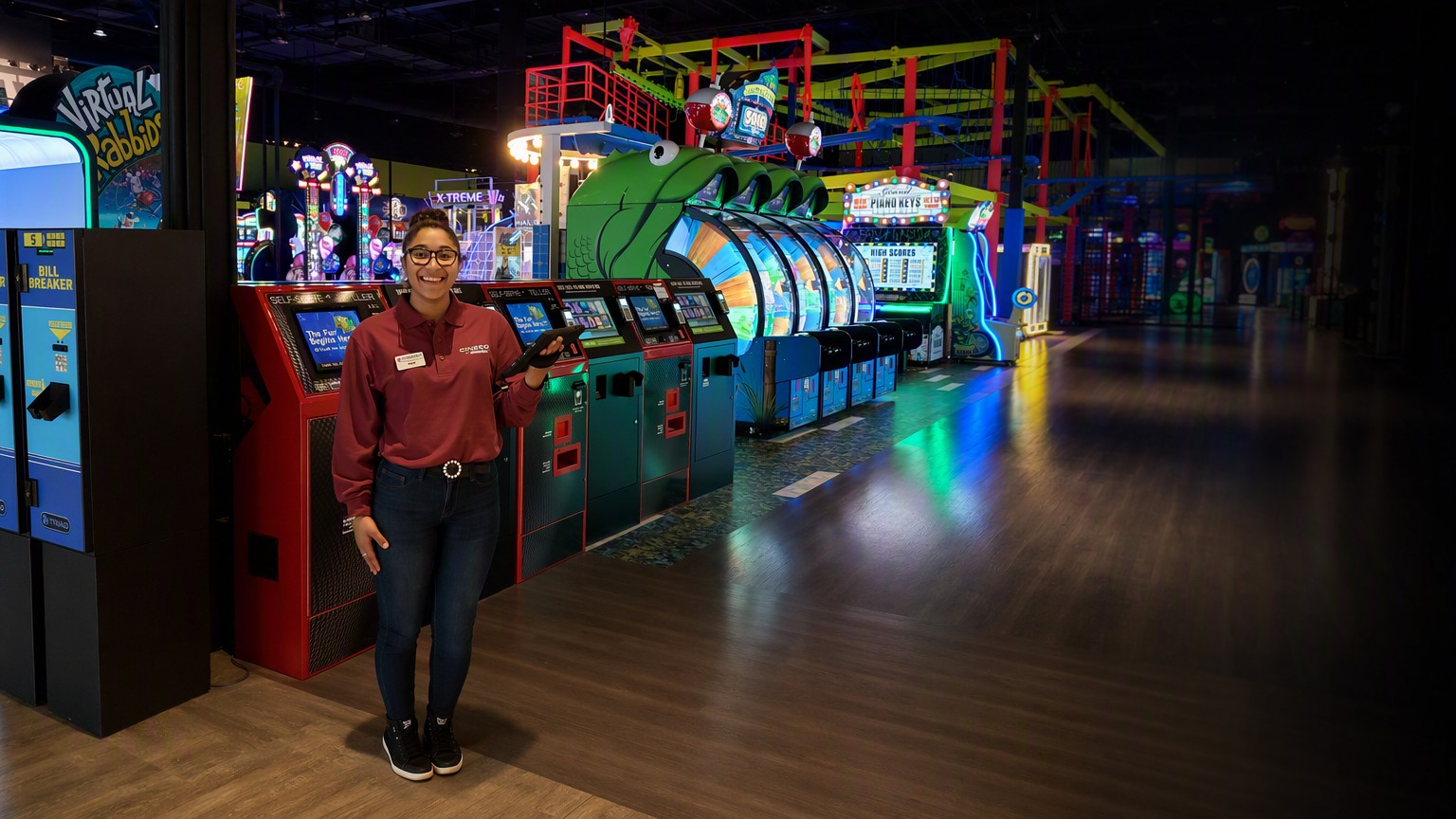
Mall Atrium vs Standalone Arcade: How to Mix Machines for Each Venue Type
A claw crane placed in a shopping mall atrium and the same claw crane placed in a standalone arcade are effectively two different products. The visitor profile, dwell time, spending behaviour and the cost of occupying floor space all differ, and the machine mix has to follow.
This is a practical comparison of the two venue types we supply most often, and how we would approach the equipment list for each.
The core difference in one paragraph
A mall atrium gives you high footfall and low control. People pass through, they are not committed to your venue, they decide in under thirty seconds whether to enter, and they usually leave when they get bored. A standalone arcade gives you low footfall and high control. People have travelled to your venue, they intend to spend, and they will stay for two hours because that was the plan.
The consequence is direct. In a mall you need machines that pull people in from ten metres away and generate a quick, satisfying play. In a standalone arcade you need machines that hold attention and reward repetition.
Side-by-side comparison
| Factor | Mall atrium | Standalone arcade |
|---|---|---|
| Visitor intent | Passing, browsing | Purposeful, planning to play |
| Average dwell time | 15-25 minutes | 90-150 minutes |
| Willingness to walk in | Low - needs a strong visual hook | High - already there |
| Revenue per visitor | Lower | Significantly higher |
| Key metric | Attraction and footfall capture | Dwell time and repeat play |
| Sweet spot for | Visual impact, prize machines, kids | Simulators, redemption, sports games |
| Typical payback | 18-24 months | 14-20 months |
Machine mix for a mall atrium
The dominant requirement is stopping power. A visitor walking past has to understand within seconds that this is an arcade, that they can play, and that it is worth the money.
Prioritise these:
- Large-format prize and claw machines with strong lighting - visible from 15 metres away, and the prizes are the advertisement. A well-lit claw bank at the entrance is the single most effective attraction in a mall unit.
- Kiddie rides facing the walkway - moving toys catch the eye of parents with children, and families enter for the rides and stay for the games.
- One or two hero simulators - placed where they are visible from the main pedestrian flow. A full-size race simulator in a mall atrium does not need to be the best performer financially; it needs to be the reason people turn in.
- Change machines as a visual anchor - a bank of brightly lit change machines near the entrance signals "this is a real arcade" and solves a practical need at the same time.
Deprioritise these:
- Large numbers of redemption games - they need dwell time to work, and mall visitors do not stay long enough to chase redemption tickets.
- Deep seating or anything that consumes floor area, since rent in a mall is charged per square metre of occupied space and you want maximum machine density, not comfort.
Space discipline: Mall rent is expensive, so plan for a tight machine count with high visual impact. A 300 square metre mall unit should feel full with 20 to 25 machines if they are arranged well. Packing in 40 machines usually means aisles become unusable.
Machine mix for a standalone arcade
Here the economics reverse. You have already won the visitor, so now you maximise revenue per hour of their stay.
Prioritise these:
- Motion simulators and racing cabinets - highest revenue per square metre per hour, and they are the reason people choose a standalone arcade over a mall unit. A serious racing setup is a competitive advantage.
- Two-player sports and skill games - they bring in a second player, doubling revenue from the same machine footprint, and they work for groups and couples.
- Full redemption game lines - redemption is the engine of a long stay. The ticket economy only works if the player intends to win enough prizes to be worth redeeming, which requires an hour or more of play.
- A well-stocked prize counter - visible from the play floor, with clear pricing. In a standalone arcade, prize redemption is a large share of total revenue and cannot be an afterthought.
Deprioritise these:
- Too many kiddie rides relative to the family traffic - they take prime space and only pay off if the venue is genuinely family-oriented.
- High-maintenance specialty machines in the first tranche. Get the core right, then add differentiation.
Space discipline: A standalone venue can afford more floor per machine, because your rent is amortised over a longer stay. Layout should support circulation and let a family group watch a sibling play. Depth of experience beats density.
The relocation option most operators miss
Many venues eventually run both formats. A common and profitable pattern is to place a small, high-impact selection of machines in a mall atrium as a customer-acquisition point, and operate the full range in a standalone location.
If you are considering this, choose machines for the mall unit that specifically work in a transient setting:
- Machines that are visually distinctive rather than operationally complex
- Formats that appeal to children and families, which are the mall traffic you will convert
- Compact footprints, since mall space is charged at a premium
We manufacture a range that covers both use cases, from compact mini claw cranes and key masters for premium mall positions to full-size racing simulators and redemption game lines for standalone floor space.
One thing that applies to both
Regardless of format, the entrance sightline decides a lot. The first machine a visitor sees should be the strongest visual you own, positioned where it is visible on entry. Everything else in the layout is secondary.
And in both cases, the transport and installation planning has to be right the first time. Confirm container loading, voltage and plug type, and the location of your nearest spare parts source before you commit. A machine that cannot be repaired locally stops earning from the day it breaks.
Getting a recommendation for your venue
Tell us the venue type, floor area, expected daily footfall, target audience and destination market. From that we can propose a machine mix with quantities, and be straightforward with you about which models will earn in your specific location and which will not. We have 21 years of manufacturing experience and export to over 150 countries.
Tell us your venue type, floor area, target market and quantity, and our export team will propose a machine mix with confirmed pricing, MOQ and delivery timing.